Garage Storage: Wall Systems That Work
Slatwall, pegboard, rails, and shelves do different jobs. How to choose a garage wall system, fix it to studs properly, and zone the wall by how often you need things.
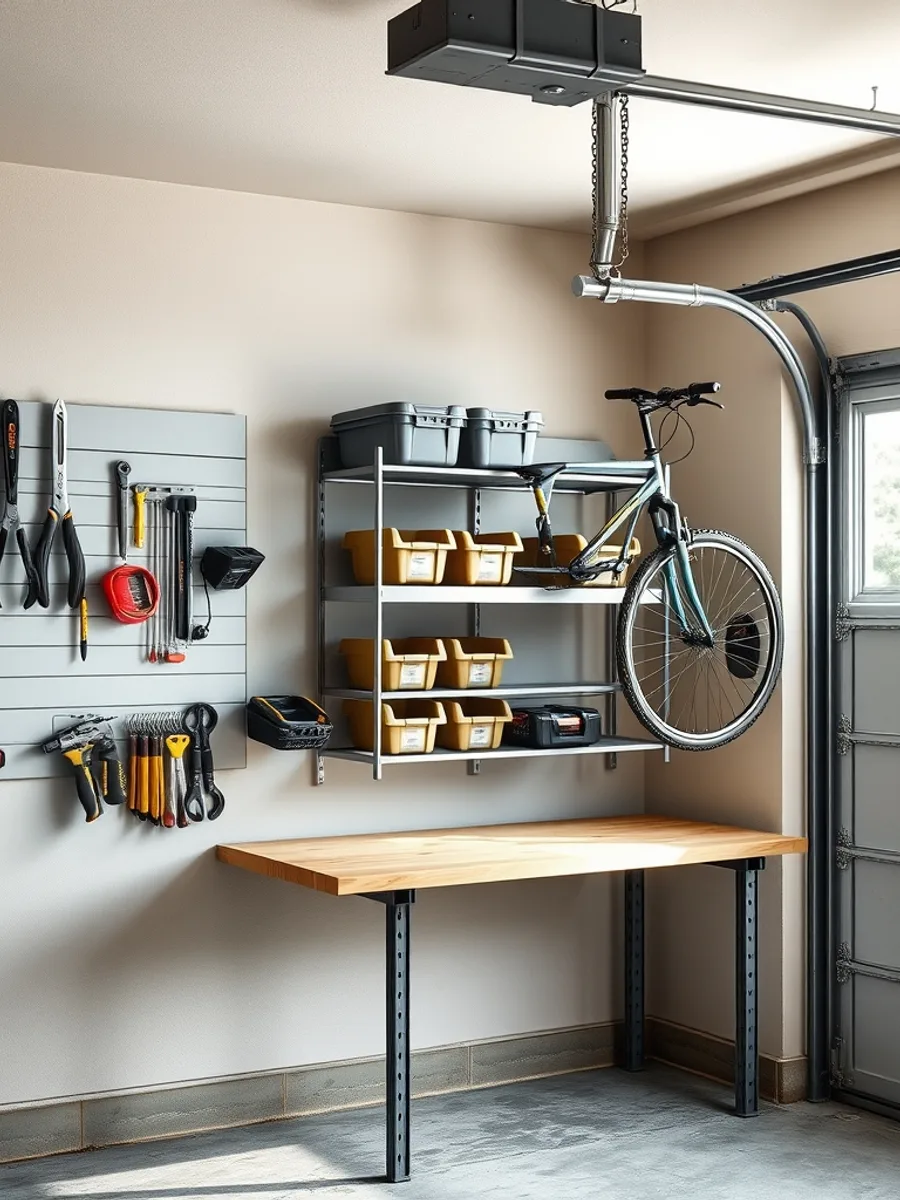
A garage usually has more wall than floor, and almost none of it is used. The floor fills up because everything lands there by default, and the walls stay bare because hanging things properly takes an hour and a drill. That hour is the whole project.
This post contains affiliate links. If you buy through them, we may earn a commission at no extra cost to you. Read our Affiliate Disclosure.
The systems themselves are simple. What separates a wall that works from one that sags is the mounting, and the order in which you put things up.
Four systems, four different jobs
Slatwall, pegboard, rails, and shelving are not competitors. Each suits a different kind of object, and most good garages use two or three of them together.
Slatwall or a grooved panel system takes a range of hooks and baskets on a single panel, which makes it the most flexible option for hand tools, cords, and garden equipment. Pegboard is cheaper and better for small, light items — screwdrivers, pliers, wrenches — because the holes are fixed and the hooks are inexpensive. A wall rail with heavy hooks handles the awkward, heavy, long things: ladders, hose reels, bikes, folded chairs. Steel shelving holds the boxes and bins that do not hang.
Rails are the most underrated. Two horizontal rails at chest and shoulder height, with movable hooks, can hold an entire garden tool collection in a way that stays adjustable as the collection changes.
Fix it to the studs, or fix it to nothing
This is the part that decides whether the wall works. Garage walls are usually drywall over studs at sixteen-inch centers, and drywall alone will not hold a loaded hook, a bike, or a shelf of paint.
Find the studs with a stud finder or by tapping, mark them, and attach rails and shelving with lag screws or structural screws into the studs. For a panel system, screw through the panel into studs at every stud it crosses, not just at the ends. For heavy single items, use two fasteners rather than one. Where a stud is not available and the load is light, a proper toggle anchor is acceptable — but it is not a substitute for a stud when the item weighs as much as a bicycle.
Manufacturers publish weight ratings; treat them as a ceiling for a perfect installation, not an average. A hook rated for a heavy load in ideal conditions will still pull out of drywall.
A plywood backer changes everything
If the wall is bare studs, or you want maximum flexibility, attach a sheet of plywood or OSB across the studs first. It gives you a continuous surface to screw into anywhere, spreads the load, and turns the whole wall into a mounting surface. It is the single best upgrade for a garage that will hold a changing set of things.
Zone by frequency, not by category
The usual mistake is to organize the garage by type — all tools together, all paint together — which puts the thing you use every week at the back. Organize by how often you need it instead.
The wall nearest the door, at waist to shoulder height, is for daily and weekly items: the drill, the tape measure, the dog leash, the bike you actually ride. The middle zone holds monthly things: garden tools, the hose, the ladder. The top of the wall and the ceiling are for seasonal and long-term storage — holiday boxes, camping gear, the ladder you use twice a year.
Keep anything hazardous — paint, solvents, fuel — in a locked cabinet or on a high shelf out of reach of children, and never above eye level where you have to lift it down awkwardly.
Hardware worth putting on the wall
| Product | Best for | What to know |
|---|---|---|
| Slatwall panel kit | Hand tools, cords, adjustable hooks | Confirm the panel spacing matches the hooks you plan to use |
| Pegboard kit with hooks | Small tools and light items | Fine for screwdrivers, not for ladders; hooks pull out under load |
| Wall rail with hooks | Ladders, bikes, hose reels, chairs | Check the rail's rated load and anchor every bracket into a stud |
| Steel shelving unit | Bins, boxes, bulk supplies | Look at shelf capacity per shelf, not the total for the unit |
| Overhead ceiling rack | Seasonal boxes, kayaks, long items | Needs ceiling joists; check clearance above the garage door track |
Skip anything that requires a proprietary hook you cannot replace, and be wary of "heavy duty" claims on rails that ship with short screws. The screws in the box are usually the weak point.
The floor is a system too
Once the walls are working, the floor stops being storage. A shelving unit on casters, a wheeled bin for recycling, and a clear path to the door are usually enough. If the garage also holds a freezer or a second fridge, leave ventilation space around it and keep the floor in front clear.
The other thing a garage wall does well is hold the things that make maintenance easier: the ladder, the hose, the broom, the oil. If the annual maintenance list lives in the garage, our seasonal home maintenance checklist pairs well with a wall that can actually reach its own tools. For bins that sit on the shelf, our notes on storage baskets cover the sizes that stack.
FAQ
What is the best wall system for a garage?
Slatwall for flexibility, pegboard for small light tools, rails for heavy and awkward items, and steel shelving for boxes. Most garages work best with a rail plus shelving as a minimum, adding pegboard or slatwall on the busiest wall.
Can you hang a bike from drywall?
Not safely. A bike weighs enough to pull an anchor out of drywall over time, especially with the movement of lifting it on and off. Fix the hook or hoist into a joist or stud, or use a plywood backer across the studs.
How much weight can garage wall storage hold?
It depends entirely on the mounting, not the hook. A bracket screwed into a stud can carry what the manufacturer rates; the same bracket in drywall carries very little. Read the rating and then install to the stronger of the two.