Building an Entryway Drop Zone
A drop zone is three things at the right heights: hooks, a bench, and a place for wet shoes. How to plan one that survives coats, bags, and school runs.
The entryway is where a household's habits become visible. Coats land on the nearest chair, bags on the floor, keys wherever they fall, and by Friday the small space by the door looks like the end of a long week. A drop zone does not fix habits, but it gives them somewhere to land.
This post contains affiliate links. If you buy through them, we may earn a commission at no extra cost to you. Read our Affiliate Disclosure.
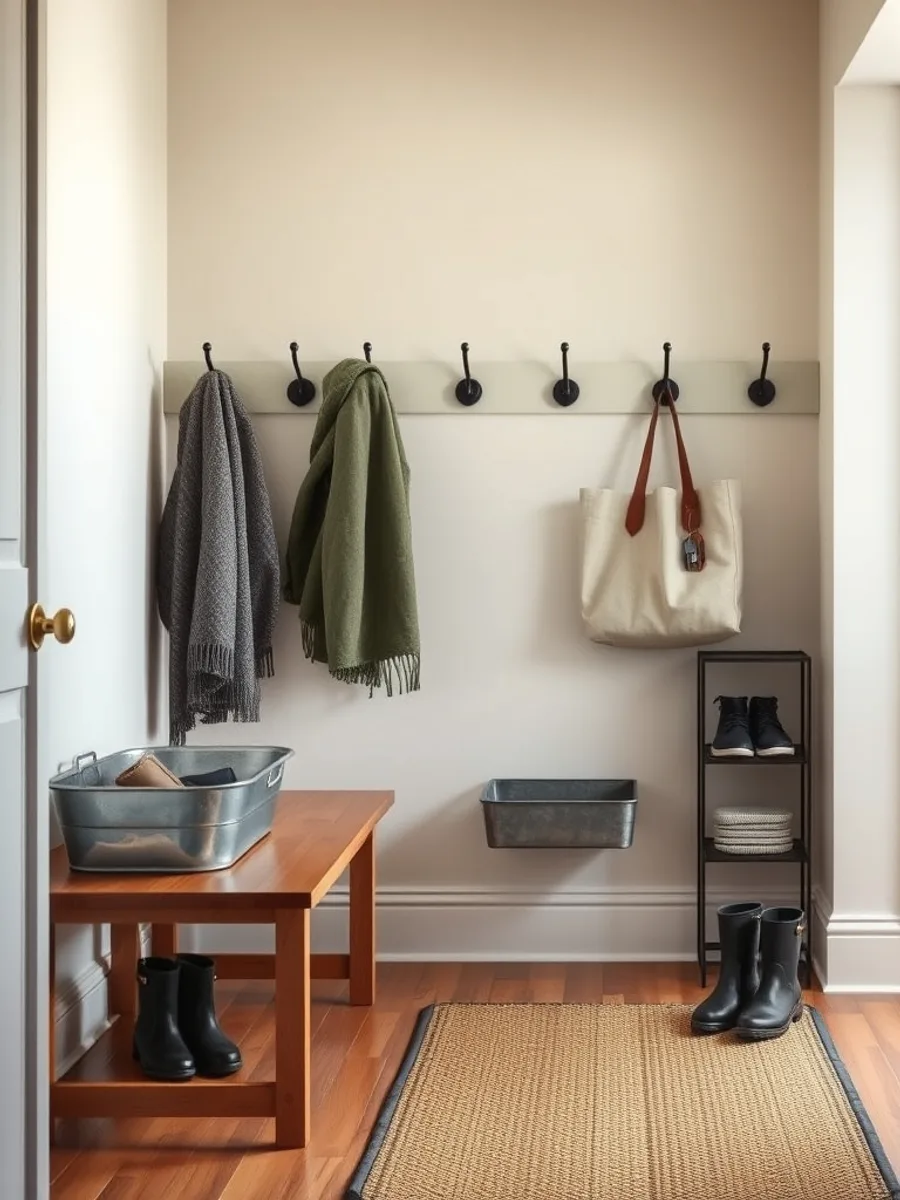
The good news is that the working version is small and specific: hooks, a bench, and a place for wet shoes, each at the right height for the people who use them.
Measure the run you actually have
Start with the wall, not with the catalog. Note the width between the door frame and the nearest corner, and whether the door swings into that space. An entry that is thirty inches wide will take a bench and a boot tray; a hundred-inch run will take a bench, hooks, a shelf, and a tall cabinet.
Heights matter more than most guides admit. An adult coat hook sits around sixty inches from the floor; children need a second row around thirty-six to forty-two inches, and the difference between those two numbers is the difference between a child hanging up a coat and dropping it. A bench seat is comfortable at seventeen to eighteen inches, with a depth of fifteen to eighteen inches — deeper wastes floor space, shallower is uncomfortable to sit on.
Hooks, bench, basket
Those three elements do most of the work, in that order. Hooks hold the things that arrive and leave daily. The bench holds bags, provides a place to sit for shoes, and often hides shoe storage underneath. The basket or tray handles the wet, dirty, and shapeless — boots, umbrellas, dog leashes.
Hooks carry more than coats
The number of hooks is usually underestimated. Count the people in the house, then add two: one for a guest and one for the bag that never goes upstairs. A row of five hooks on a sixty-inch wall is realistic; six or seven is better if the wall allows. Look for hooks with a deep enough profile that a tote handle stays on, and fix them into studs or use proper wall anchors, because a loaded coat plus a bag is heavier than it looks.
A shelf above the hooks adds a hat-and-glove spot and visually finishes the run. Keep it shallow so it does not become a dumping ground, and keep the underside clear enough that a tall adult does not hit their head on it.
Pieces that earn their place
| Product | Best for | What to know |
|---|---|---|
| Wall hook rack | Coats, bags, keys | Check the weight rating and whether the included screws suit your wall |
| Bench with shoe storage | Sitting to put shoes on, hiding clutter | Measure the seat height; some are lower than they look in photos |
| Boot tray | Wet or muddy shoes | A raised lip matters more than the pattern; empty it weekly |
| Key rack or bowl | Keys, sunglasses, dog leash | Put it at eye level by the door, not across the room |
| Woven basket | Hats, gloves, umbrellas | Choose one with a handle and a wide mouth so it is easy to use one-handed |
Two things to skip. Open shelving with deep cubbies looks generous and becomes a dust trap for things nobody uses. A tall shoe cabinet with doors is only worth it if the doors actually close over your household's shoes; measure the tallest boots before buying.
Small entries: go vertical
If the floor space is tight, take everything upward. A narrow wall-mounted bench, a hook rail at adult height, a second rail lower for children, and a slim shelf above is enough for a family of four if the shoe situation is handled with a tray and a rotation.
The trick is to keep the essentials within reach and the rest elsewhere. Winter coats that are not in this week's rotation belong in a closet, not on a hook, and the same goes for the bag you use once a month. An entryway works when it holds the current week, not the whole wardrobe. Our notes on closet organization cover where the rest should go, and if the run is too short for a bench, the ideas in our entryway makeover piece include narrower alternatives.
Keeping it working
A drop zone degrades in a predictable order: the hook fills with bags, the bench fills with mail, the basket fills with things that have no home. The fix is a two-minute reset at the end of the day, done by whoever is last through the door.
- Bags go on their hook or into the closet, not on the bench
- Mail goes to the desk or the recycling, not into a pile
- Wet shoes go on the tray, not the rug
- Once a week, empty the tray and the basket
A basket that takes ten seconds to use is the difference between a system and a pile. Our guide to storage baskets covers the sizes that work for entryways.
FAQ
What height should entryway hooks be?
Around sixty inches for adults, and thirty-six to forty-two inches for children, so they can reach without a stool. If the household is mixed, two rows at those heights work better than one compromise row.
Can you make a drop zone in a narrow hallway?
Yes, if it is shallow. A wall-mounted bench under twelve inches deep, a hook rail, and a boot tray take very little floor space. Keep the walkway at least thirty-six inches wide so the door and the corridor still work.
How do you stop an entryway looking cluttered?
Limit what lives there to what the current week needs: everyday coats, one bag per person, shoes and keys. Anything seasonal or occasional belongs in a closet, and the bench top should be cleared daily rather than weekly.