Entryway Ideas for Small Spaces
A narrow entryway needs a landing strip, somewhere to sit, and light that works at seven in the morning. What to add first, and the measurements that keep a hall usable.
An entryway is judged in the four seconds it takes to get your coat off. If there is nowhere to put the keys, the mail, and the bag, all three end up on the floor or on the nearest chair, and the mess travels into the rest of the house. Small halls do not need more furniture; they need the right three pieces in the right places.
This post contains affiliate links. If you buy through them, we may earn a commission at no extra cost to you. Read our Affiliate Disclosure.
Solve the Landing Strip First
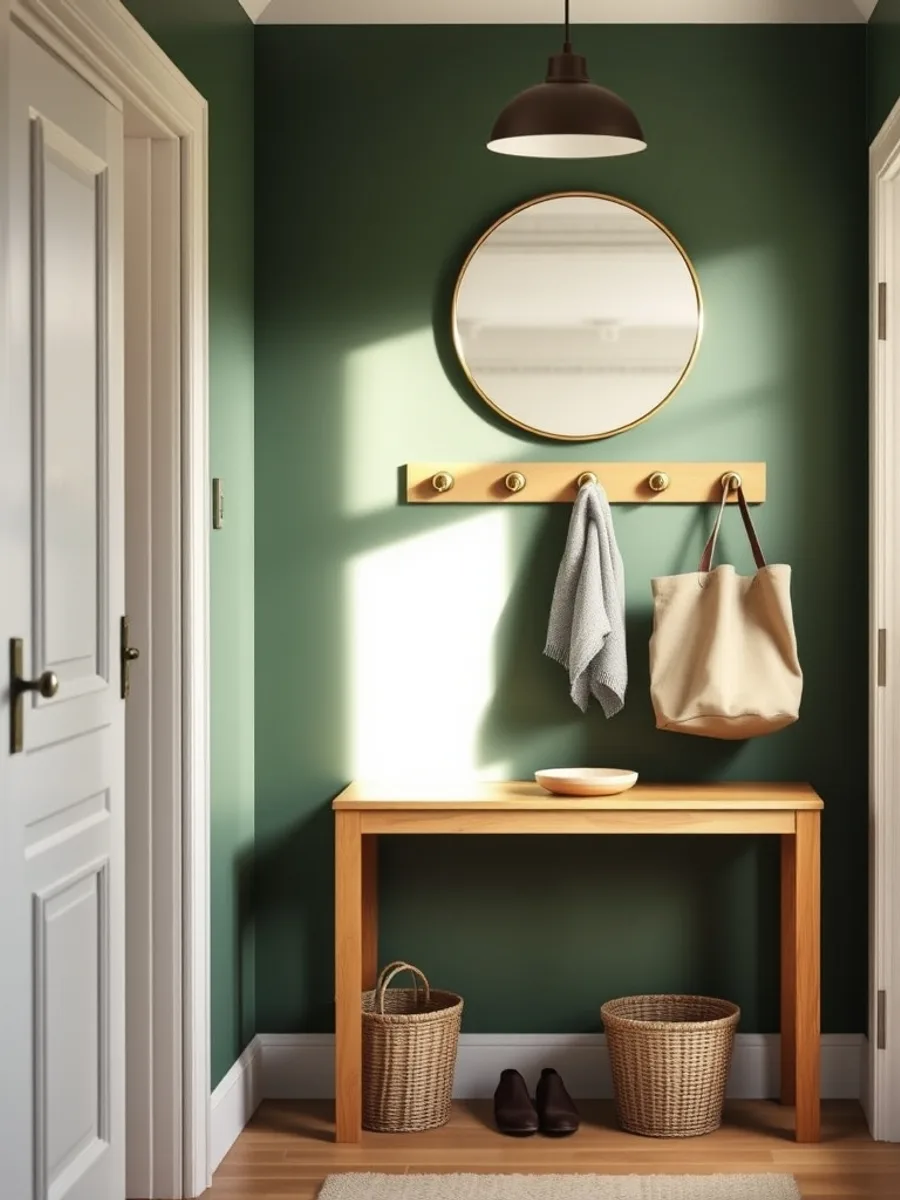
The landing strip is the surface where things arrive: keys, mail, phone, dog leash. It needs to be within arm's reach of the door as you come in, at roughly hip to waist height. A console table does this job, and so does a shelf at 36 inches if the hall is too narrow for legs.
Depth is the constraint. A console deeper than 12 to 14 inches will crowd a hall narrower than four feet, and you will clip it every time you carry groceries through. Shallow is better than wide here. A slim console table with a lower shelf gives you a place for a basket without adding floor footprint.
The 12-inch test
Stand in the doorway with a bag in each hand and walk to the far end of the hall. If you turn sideways or brush the wall, the furniture is too deep. Repeat with the largest thing you routinely carry, which is usually a laundry basket or a suitcase, not a purse. Whatever survives that test is the piece you can live with.
Seating and Hooks at the Right Height
A bench earns its space if someone in the house needs to sit to put shoes on. Seat height of 17 to 18 inches suits most adults; lower than 16 and it becomes a shelf, higher than 20 and shorter people cannot get up easily. In a hall under three feet wide, a folding stool that tucks under the console does the same job and takes no floor.
Hooks are the piece most people get wrong. Sixty inches from the floor is a comfortable height for an adult to hang a coat without stretching. Children need their own row at about 48 inches, or a low hook they can reach from a step. Two rows, one high and one low, is the practical arrangement in a family hall.
A wall-mounted hook rack with four to six hooks handles a household of four if each person has one hook and one spare for a guest. More hooks than people encourages coat accumulation, and a hall with eight coats on eight hooks looks worse than a hall with three.
Light and a Mirror
Entryways are usually lit by whatever leaks in from the next room, which is why they feel dim at 7 a.m. in winter. A single ceiling fixture or pendant on a warm bulb is the minimum. If there is no wiring, a rechargeable wall light or a lamp on the console on a timer will get you through the dark months.
A mirror does two things at once: it gives you a last check before you leave, and it doubles the apparent depth of a narrow hall. Hang it opposite a window or opposite the main light source rather than beside it, and put the center at roughly eye level. A round mirror softens a hall full of right angles; a rectangular one makes a low ceiling look lower.
Keep the console surface almost empty. One dish for keys, one lamp or plant, nothing else. The moment a console holds mail, chargers, and a forgotten coffee cup, it stops being a landing strip and becomes another surface to tidy. Grouping what is left follows the same logic as styling open shelves: odd numbers, varied heights, and one deliberate gap.
Storage That Fits a Narrow Hall
Shoes are the real problem. A shallow shoe cabinet 8 to 10 inches deep will hold a surprising amount if the shelves are angled, but most cabinets sold as entryway pieces are 14 inches or more. Measure before you buy, and check whether the doors need clearance to open.
The alternatives, in rough order of how much floor they take: a lidded basket, a boot tray under the console, an over-door hanging organizer, or a wall-mounted rack above head height for out-of-season items. A shallow woven basket works for two or three pairs of everyday shoes and forces you to cull the rest, which is most of the battle.
A runner rug helps more than it seems. In a hall three to four feet wide, a runner around two feet wide leaves visible floor on both sides, which makes the passage feel wider rather than narrower. Choose a washable one, because this is the highest-traffic patch of floor in the house. Our entryway drop zone guide covers the daily routine that keeps the system working.
What to Check Before You Buy
- Console depth against your hall width, measured with a bag in each hand
- Whether the console has a lower shelf for a basket, or only a top surface
- Hook height for the shortest and tallest person in the house
- Bench seat height, if anyone actually sits to put shoes on
- Rug width against the floor left visible on each side
- Whether the mirror will reflect a window, a light, or a blank wall
FAQ
How do I make a narrow hallway feel bigger?
Keep the furniture shallow, use a mirror opposite the light source, and let floor show on both sides of a runner. A single large mirror and a light wall color do more than removing furniture, because the hall still has to function. Avoid dark furniture at eye level in a passage you walk through sideways.
What should go on an entryway console?
A dish for keys and one decorative object, nothing more. If the console is also your mail pile, add a single mail tray and empty it weekly. The surface should be clear enough that you can put a bag down without moving anything first.
Do I need a bench in a small entryway?
Only if someone sits to put shoes on. Otherwise a stool that tucks underneath, or nothing at all, is better in a hall under three feet wide. Seating that nobody uses just collects bags.