Closet Organization: Start With What You Own
Before buying a single bin, count what is actually in the closet. A measured, unsentimental method for rods, shelves, and the clothes you really wear.
Almost every closet we are asked about has the same problem, and it is not a storage problem. It is a mismatch: shelves sized for someone else's wardrobe, a rod at a height that wastes the top two feet, and a floor covered in things that never had a home. Buying bins before counting what you own just makes the mismatch tidier.
This post contains affiliate links. If you buy through them, we may earn a commission at no extra cost to you. Read our Affiliate Disclosure.
The sequence that works is dull and effective. Empty the closet, count what is there, measure what it needs, then build or buy to those numbers.
Empty it out and count
Take everything out. All of it, including the bag of clothes you have been meaning to sort and the boots at the back. Put it on the bed in rough categories — hanging clothes, folded clothes, shoes, bags, everything else — and count each pile.
The count is the part people skip. It tells you whether you need forty inches of hanging space or forty inches of shelf space, which is the difference between a closet that works and one that needs a clean-out every season. It also exposes the honest ratio: most of us wear a small fraction of what hangs there, and the surplus is what makes the closet feel impossible.
While everything is out, measure. Rod height, shelf depth, the width of the opening, and the distance from the rod to the back wall. Write the numbers on a note and keep it with you when you shop. Nothing in a closet is expensive; buying the wrong size twice is.
Build to the clothes, not to the room
Hanging clothes need vertical clearance, and the number depends on the garment. Shirts and blouses want about forty inches of drop. Pants folded over a hanger need roughly half that. Dresses and coats need sixty inches or more. That is why a single high rod wastes space in most closets: it clears everything, including the short items that could have hung in two tiers.
The standard fix is a double-hang section — one rod around forty inches, a second around eighty — for shirts, pants, and jackets, with a full-height section at one end for dresses and coats. If you have the width, keep shelves at twelve inches deep; deeper shelves become a place to lose things at the back. A top shelf close to the ceiling is for out-of-season items and suitcases, not for daily clothes.
The hanger test
Matching hangers are not an aesthetic indulgence; they are a measurement tool. When every hanger is the same slim profile, you fit noticeably more garments in the same width, and you can see what you own at a glance. Turn every hanger backwards at the start of a season and turn it back when you wear the item. Whatever is still backwards at the end of the season is the honest answer to what you do not wear.
The keep rule
Decide the rule before you start sorting, because deciding item by item in the moment is how closets stay full. Ours is simple: if it does not fit now, does not suit the life you actually have, or has not been worn in a year, it goes. Repairs you have not made in six months count as a no.
Keep a single "maybe" box with a date on it. If the date passes and you have not opened it, the box leaves. This one habit does more than any shelving system, because it stops the closet from refilling after every clean-out.
The short list that earns its place
Most closet purchases are cheap enough to be impulsive and useless enough to be wasted. The table below is the short list that earns its place in an ordinary closet.
| Product | Best for | What to know |
|---|---|---|
| Slim velvet hangers | Shirts, blouses, light knitwear | Save real width over wooden hangers; check the weight rating for coats |
| Clear stackable bins | Top shelf and folded overflow | Clear beats opaque because you can see what is inside without lifting the lid |
| Shelf dividers | Keeping folded stacks upright | Cheap and effective; measure shelf depth before ordering |
| Over-door hook rack | Bags, robes, tomorrow's outfit | Check door thickness and that the door still closes cleanly |
| Boot and shoe rack | Floor space and wet boots | Look for a raised shelf so wet soles are not sitting on the carpet |
Skip anything that needs assembly you will not do, and skip matching decorative boxes until the system has been working for a month. Bins are the last purchase, not the first.
Make the floor and the top shelf work
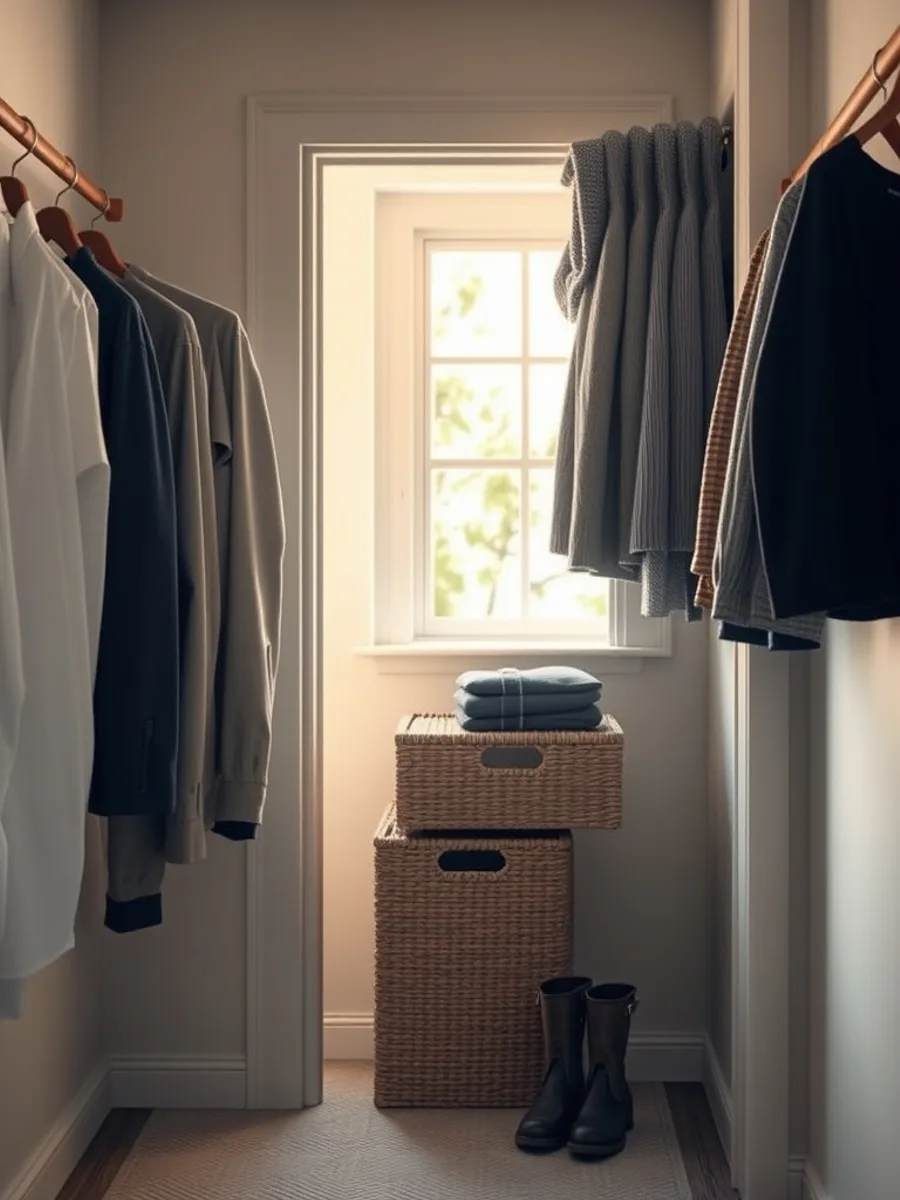
The floor is for shoes, bags, and a laundry basket — things that are heavy or awkward, not things you want to look at. A low shoe rack and one basket for dry cleaning is usually enough. If the closet floor is the only place a suitcase fits, that is where it goes, and the rest of the floor stays clear.
The top shelf holds the seasonal rotation: winter coats in summer, fans and beach bags in winter. Label the bins on the end that faces out, and keep the inventory to a size you can lift down without a step stool. Anything above head height that requires a ladder is, in practice, gone.
If the closet is genuinely too small for the wardrobe, the overflow belongs somewhere designed for it. Our notes on under-bed storage cover the containers that survive being knelt on, and laundry room setup is the other place clothes quietly accumulate.
FAQ
How many hangers should a closet have?
Slightly fewer than the number of items you actually wear. Counting hangers is a quick way to see the real volume: forty shirts on slim hangers take noticeably less width than forty on wooden ones, which is often the difference between needing a new closet and not.
What is the best height for a closet rod?
Around sixty-six to seventy-two inches for a single rod, and roughly forty inches and eighty inches for a double-hang section. The right answer for your closet is the one that clears your longest garment in the full-height section and wastes nothing in the rest.
Is it worth installing a closet system?
Only after the clear-out. A system built to a wardrobe you have already edited will fit; one bought before the edit usually ends up with empty shelves and a full floor. Measure first, then decide whether shelves, a second rod, or drawers are the missing piece.