Choosing an Area Rug for High-Traffic Rooms
A rug in a hallway or family room has to survive shoes, pets, and dining chairs. Fiber, pile, size, and a decent pad matter more than the pattern.
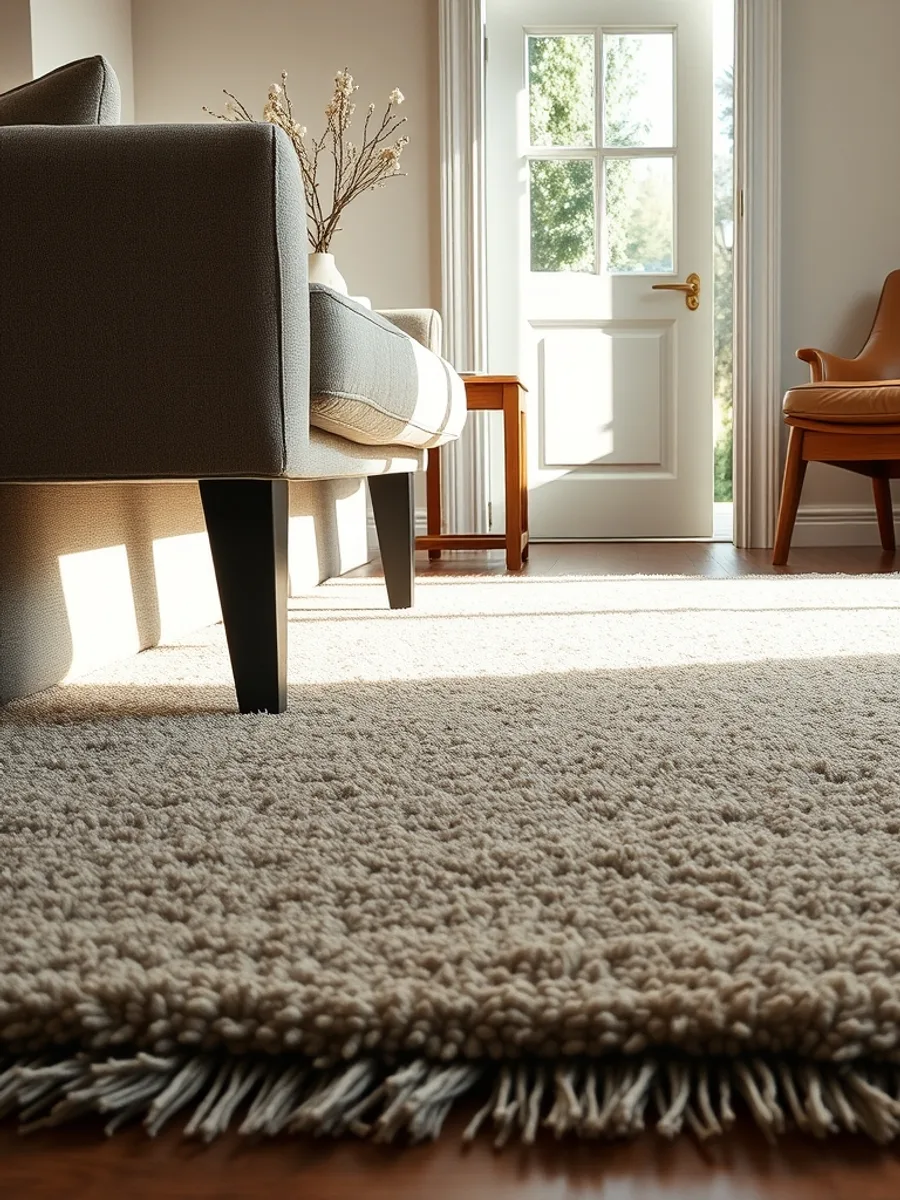
The rug in a hallway or family room takes more abuse than any other textile in the house: shoes, pet claws, chair legs dragged back from a table, a spilled coffee every few months. Most rugs that fail in these rooms were not badly made. They were chosen for the way they looked in a photograph, which says nothing about how a fiber behaves under a chair.
This post contains affiliate links. If you buy through them, we may earn a commission at no extra cost to you. Read our Affiliate Disclosure.
Fiber decides how the rug ages
Wool is the default for good reason. It resists crushing, holds dye well, and its natural lanolin repels spills long enough for you to blot them. It also sheds for the first months and costs more than synthetic options.
Nylon is the most durable synthetic and the best choice for a room with heavy foot traffic and pets. It takes dye deeply, cleans well, and resists matting. Polyester feels softer and takes color beautifully but crushes under furniture and shows oil marks. Polypropylene, often sold as olefin, handles moisture and bleach well, which makes it a reasonable choice for a playroom or a covered porch, but it is not as resilient under a dining chair.
Viscose, sometimes labeled bamboo silk or art silk, is the one to avoid in high-traffic areas: it stains permanently with water, crushes flat, and sheds. Jute and sisal are durable but abrasive underfoot and rough on bare knees.
Pile height is a maintenance decision
Low pile, under about a quarter inch, is the practical choice for hallways, dining rooms, and anywhere with a dog. Medium pile is comfortable in a bedroom and fine in a living room that does not host dinner every night. Shag and high-pile rugs hold grit at the base of the tuft, which acts like sandpaper on the fiber every time someone walks across it.
If a door swings inward, check the gap beneath it: a rug plus pad adds half an inch, which is enough to catch on the door.
Size is the mistake almost everyone makes
A rug that floats in the middle of a seating group makes the room look smaller and the furniture look borrowed. In a living room, the front legs of every seat should sit on the rug, and the rug should extend at least six inches beyond the sofa on each side. For a typical three-seat sofa, that means an 8 by 10 rather than a 5 by 8.
In a dining room, add 24 inches to the table dimensions on every side so chairs stay on the rug when pulled out. A 72-inch table needs a rug of at least 120 by 150 inches, or a 9 by 12 with a smaller table. Runners in a hallway should leave three to four inches of floor visible on each side; a runner that touches both walls looks like carpet and wears at the edges first.
For tight rooms, our guide to small living room layouts shows how to place a rug so it reads as a floor rather than an island.
Backing, edges, and the pad
A pad is not an accessory. It doubles the life of a rug by absorbing footfall, keeps the rug from sliding, and adds a layer of cushioning that makes a cheap rug feel better. Look for a pad with a felt or rubber core, quarter to half an inch thick, cut one inch smaller than the rug on every side so the edges do not curl.
Rubber-backed rugs can discolour hardwood over time; a felt pad is safer on wood. On carpet, choose a gripping pad rather than an adhesive one.
Edge finish matters more than most listings admit. Serged edges survive vacuuming; folded and glued edges fray. Hand-finished binding is a sign of care, but a machine-serged edge on a good wool rug will outlast a hand-bound edge on a poor one.
Reading the listing without being fooled
Face weight, given in ounces per square yard, is the most useful number. Around 20 to 30 ounces suits bedrooms and light use; 30 to 40 is a reasonable middle for family rooms; above 40 ounces is genuinely heavy domestic quality. Density matters as much as weight: a dense low pile outlasts a loose thick one.
Be sceptical of "stain resistant" as a headline. Some treatments are effective and permanent; others wash out. "Hand-tufted" means a gun was used, not that a person knotted it by hand, and it is a fine construction for the price. "Hand-knotted" is the labour-intensive method and should come with a price and a knot count to match.
| Product | Best for | What to know |
|---|---|---|
| Low-pile wool rug, 8 by 10 | Living rooms and hallways | Sheds at first; vacuum without a beater bar |
| Nylon rug with stain treatment | Pet households and family rooms | Very durable; confirm the treatment is built in, not sprayed on |
| Washable flatweave rug | Kitchens and playrooms | Thin, so it needs a pad; check the machine size before buying |
| Indoor-outdoor polypropylene rug | Covered porches and mudrooms | Handles moisture; not comfortable underfoot in a living room |
| Felt rug pad, quarter inch | Any rug over hardwood | Cut one inch smaller than the rug; felt beats foam for longevity |
A practical pairing is a low-pile wool rug in 8 by 10 with a felt rug pad cut to size. For a house with a dog, a nylon area rug with a built-in stain treatment is the lower-risk choice, and a washable flatweave rug is useful in a kitchen or playroom.
Cleaning a rug that takes real traffic
Vacuum high-traffic lanes twice a week, using suction rather than a beater bar on wool and fringed rugs. Blot spills from the outside in; scrubbing pushes the stain into the backing, where it stays. Rotate the rug every six months to even the wear, and have wool washed professionally every two to three years in a busy house. Our upholstery cleaning basics covers the same blotting method for furniture, and the entryway drop zone guide explains how to stop grit at the door before it reaches the pile.
FAQ
How long should a wool rug last in a hallway?
A dense low-pile wool rug with a pad should give you eight to twelve years in a hallway before the traffic lanes show. Lighter, looser wool wears through in three to five. Rotation and regular vacuuming move the number most.
Can I put a high-pile rug under a dining table?
You can, but chairs will sink and the pile will flatten permanently in the chair zones. A low-pile or flatweave rug is the better choice under a table, and it is much easier to wipe clean when something spills.
Do I really need a rug pad?
Yes, especially on hardwood. A pad keeps the rug from sliding, cushions footfall, and prevents the backing from grinding dust into the floor finish. It also makes an inexpensive rug feel considerably better underfoot.