Small Kitchen Storage Ideas That Hold Up
Storage ideas for small kitchens that survive an ordinary week, from wall shelves to roll-out drawers, with the measurements to check before you buy.
Most small kitchens are not short of cabinets. They are short of cabinets that still work on a Wednesday night, when the rice cooker, the cutting board and three half-used bags of pasta are all out at once. Storage that looks tidy in a photograph often collapses the first time you cook something ambitious. The ideas below are the ones that survive contact with an ordinary week.
This post contains affiliate links. If you buy through them, we may earn a commission at no extra cost to you. Read our Affiliate Disclosure.
Measure four things before you buy anything
Take a tape measure and write down the depth of your counter, the clearance between the counter and the upper cabinets, the width of your deepest cabinet shelf, and how far the door of the cabinet you open most actually swings. Five minutes with a tape prevents almost every bad storage purchase we see people make in a small kitchen.
The counter-to-cabinet clearance is the number most people skip. Many kitchens are built with roughly 18 inches of space there, which is enough for a kettle and a toaster side by side and not enough for a stand mixer to live on the counter without crowding the work zone. If your clearance is nearer 15 inches, plan on counter appliances going into a cabinet when they are not in use.
Depth matters just as much. A standard base cabinet is around 24 inches deep, but the useful part is the front half. Anything pushed to the back is effectively gone. Storage that pulls forward — drawers, roll-out shelves, a basket on a shelf slide — beats storage that is merely large. This is the single most reliable upgrade in a small kitchen, and it is also the one people postpone because it is not visible.
Go up, then go down
Wall space above the counter is the only storage in a small kitchen that costs no floor area, and it is routinely wasted on one decorative row of jars.
What actually belongs on a wall
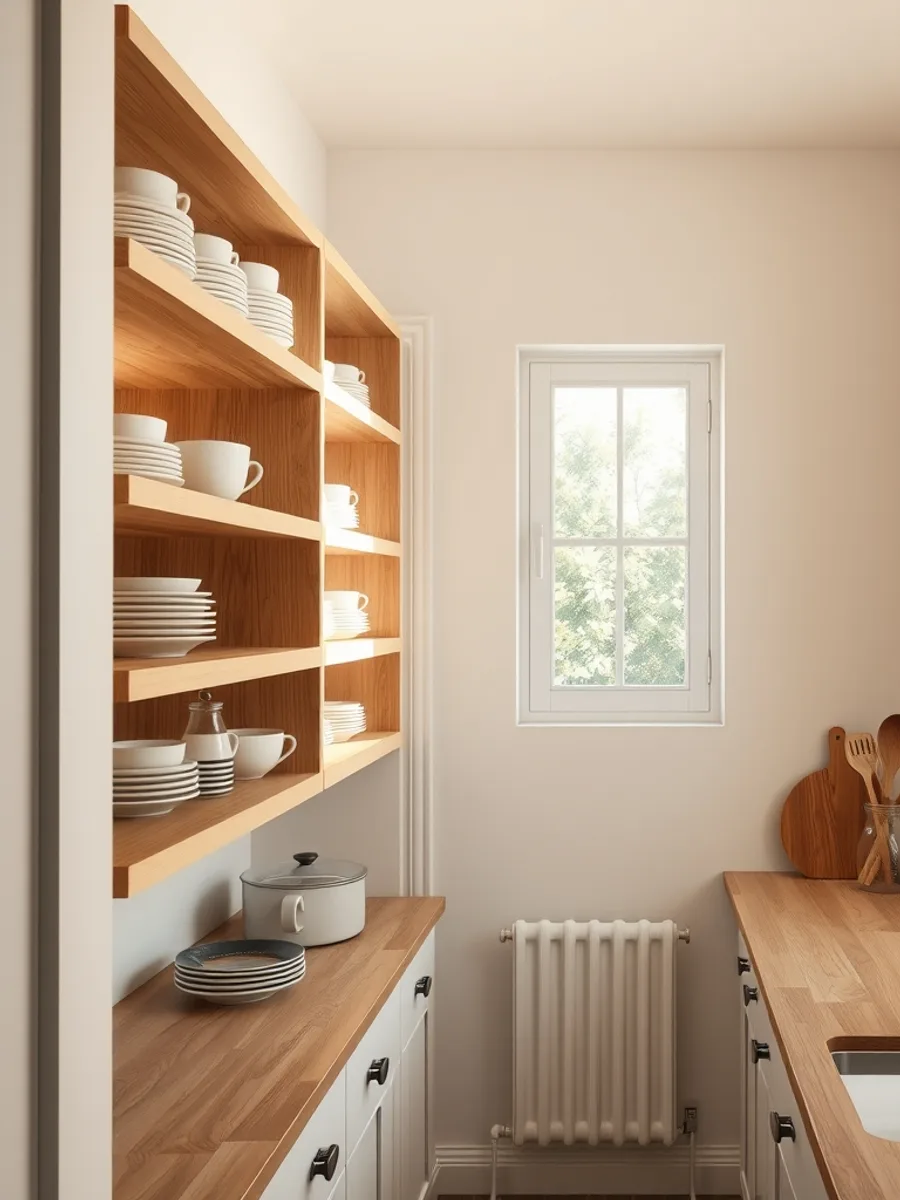
A narrow shelf at eye level, 8 to 10 inches deep, holds mugs, small bowls, and the oil and vinegar you reach for daily. A rail with hooks holds utensils, a strainer, and the two or three pans you use most. Both keep the counter clear without hiding things behind doors, and both are cheap enough to change later if the arrangement turns out to be wrong.
Two cautions. Anything on an open shelf within a couple of feet of the stove will collect grease, so keep that zone for metal and glass rather than paper, cloth and unsealed dry goods. And a rail loaded with heavy pans needs screws long enough to reach studs or proper wall anchors; a rail that pulls out of drywall takes a strip of wall with it.
Below the counter the same logic runs in reverse. The space under the sink is awkward because the plumbing interrupts it, so two shallow stacking boxes work better than one deep tub. A deep drawer beside the stove is worth more than a corner carousel, because you can see the whole contents at once instead of rotating a shelf to find the lid you need. If you are reorganizing cabinets rather than walls, our guide to countertop organization covers what deserves to stay out at all.
Pick one container system and stop
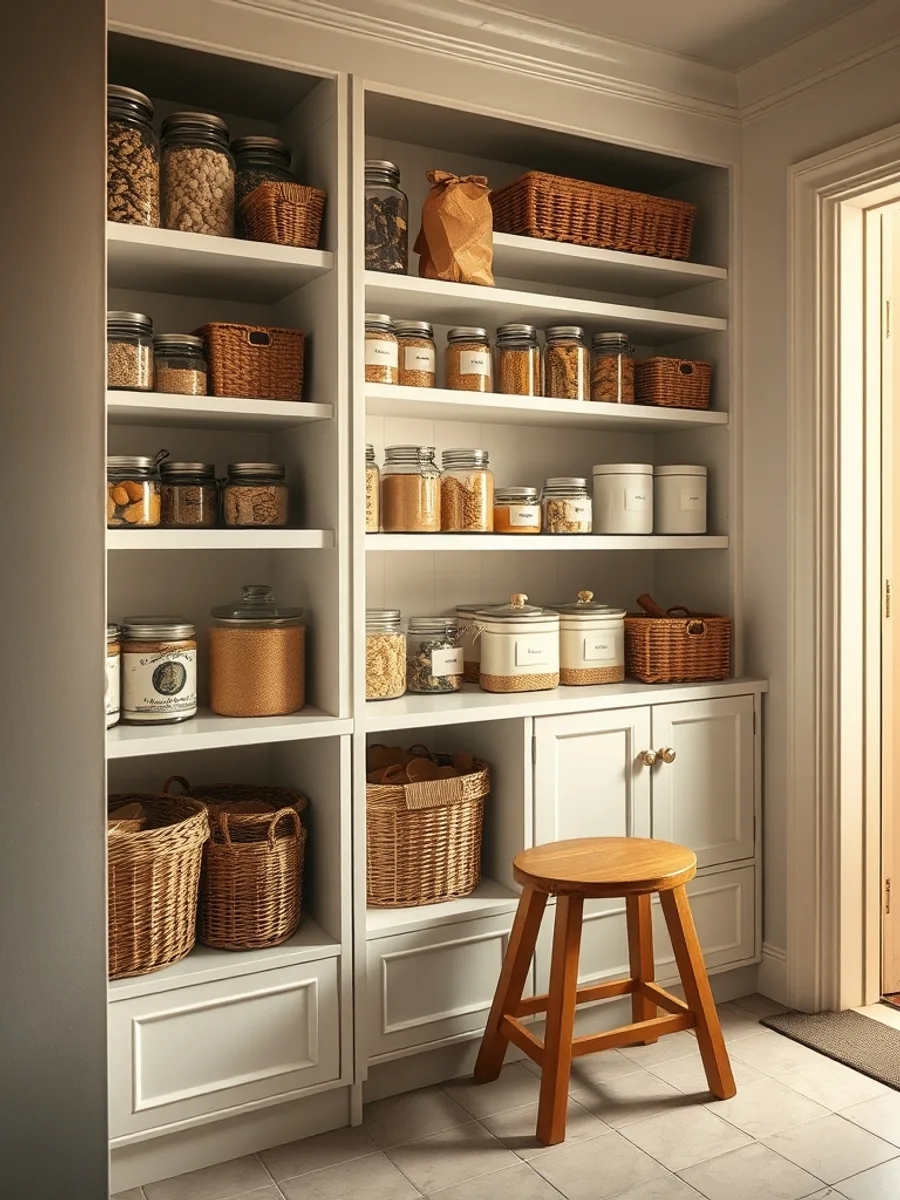
Mismatched containers waste volume. Round jars leave dead space in square cabinets, tall boxes block the shelf behind them, and a collection built up over five years never stacks. Choose one footprint and one lid design, then buy more of it only when you have filled the space you have.
Square and rectangular containers with straight sides use a cabinet far better than anything tapered. Clear bodies save you from opening four jars to find the lentils. If the containers live on open shelving rather than behind a door, choose opaque or amber glass, because light degrades oils and spices faster than most people expect.
The lid problem
Lids are where container systems fail. They do not nest, they hide at the back of drawers, and they multiply. Keep every lid for a given system in one shallow drawer or one labeled box, and retire any container whose lid has gone missing rather than keeping the body "just in case". A drawer of orphaned bases is a storage system quietly costing you a shelf.
What to check before you commit
- Measure the clearance above the counter, not just the width.
- Confirm the cabinet door opens far enough to clear a pull-out frame.
- Check that shelf pins can take the load; a full shelf of canned goods is heavier than it looks.
- Prefer adjustable over fixed, so the layout can change when your cooking does.
- Buy one unit first and live with it for a week before buying the set.
A shortlist of pieces that tend to earn their space: stackable clear pantry containers with straight sides for dry goods you buy in bulk, a narrow tiered shelf organizer that turns one deep shelf into two shallow ones, a wall-mounted rail with hooks for the pans you use daily, and roll-out cabinet drawers sized to a standard base unit.
None of these is expensive, and all of them are reversible. That matters in a rental, and it matters in an owned kitchen too, because storage needs shift as appliances come and go. If your dry goods are the real overflow, pantry organization systems is the next place to spend effort, and a few deep storage baskets will absorb the rest without demanding new cabinets.
FAQ
How do I add storage to a kitchen with no free wall space?
Look at the ends of cabinets, the side of the fridge, and the gap above the fridge, which is usually tall enough for two stacked baskets. The back of a cabinet door will hold a shallow rack for foil, wrap and lids. None of these is glamorous, but together they often free a whole shelf.
Is open shelving a mistake in a small kitchen?
It is a trade, not a mistake. Open shelves make a narrow room feel wider and put daily items within reach, but they demand that you keep the contents tidy and grease-free. If you cook with a lot of oil at high heat, closed cabinets with internal organizers will be less work.
How often should a small kitchen be re-sorted?
Twice a year is enough for most households, ideally when the seasons change and the food you cook shifts. Empty one cabinet at a time, discard anything expired, and move the items you reach for daily to the easiest shelf. The rest can stay where it is.