Pantry Organization That Stays Organized
A pantry system that survives real shopping habits: how to zone shelves, choose containers that stack, and keep dates visible without a weekly audit.
Most pantry reorganizations fail in the same way. The shelves look immaculate for three weeks, then a big grocery run arrives, the new bags go wherever there is room, and the system quietly stops being used. A pantry that stays organized is built around how you shop and cook, not around how it photographs.
This post contains affiliate links. If you buy through them, we may earn a commission at no extra cost to you. Read our Affiliate Disclosure.
Start with a full inventory, not a shopping list
Empty the pantry onto the kitchen table, shelf by shelf. Group what comes out by category rather than by where it used to live: baking, pasta and grains, cans, oils and vinegars, snacks, breakfast, backups. The shape of the pile tells you what you actually need.
Two things usually emerge. First, duplicates — three open bags of the same rice, two half-used jars of cumin. Second, a category that has outgrown its space, often baking or snacks. Both are useful information, and neither is visible when everything is behind a door.
While the shelves are empty, check the dates and set aside anything expired. Then note the shelf heights. Most pantry shelves are fixed rather than adjustable, which is why tall cereal boxes end up sideways on a deep shelf and short jars waste the space above them.
Zone the shelves by reach, not by category
The most durable systems assign shelves by how often an item is used, then sort by category within that.
Eye level, roughly between shoulder and hip, is for the things you touch daily: oils, salt, coffee, tea, the pasta you cook weekly. The shelf above eye level is for backups and occasional baking supplies. The floor or bottom shelf is for heavy items — bulk bags of flour and rice, large bottles, the slow cooker — because lifting from above shoulder height is how people hurt their backs.
Deep shelves need a front and a back. Put the item in use at the front and its replacement behind it, so restocking is a swap rather than a search. This single habit removes most of the "we already had that" purchases that fill a pantry with duplicates.
Keep a small step stool
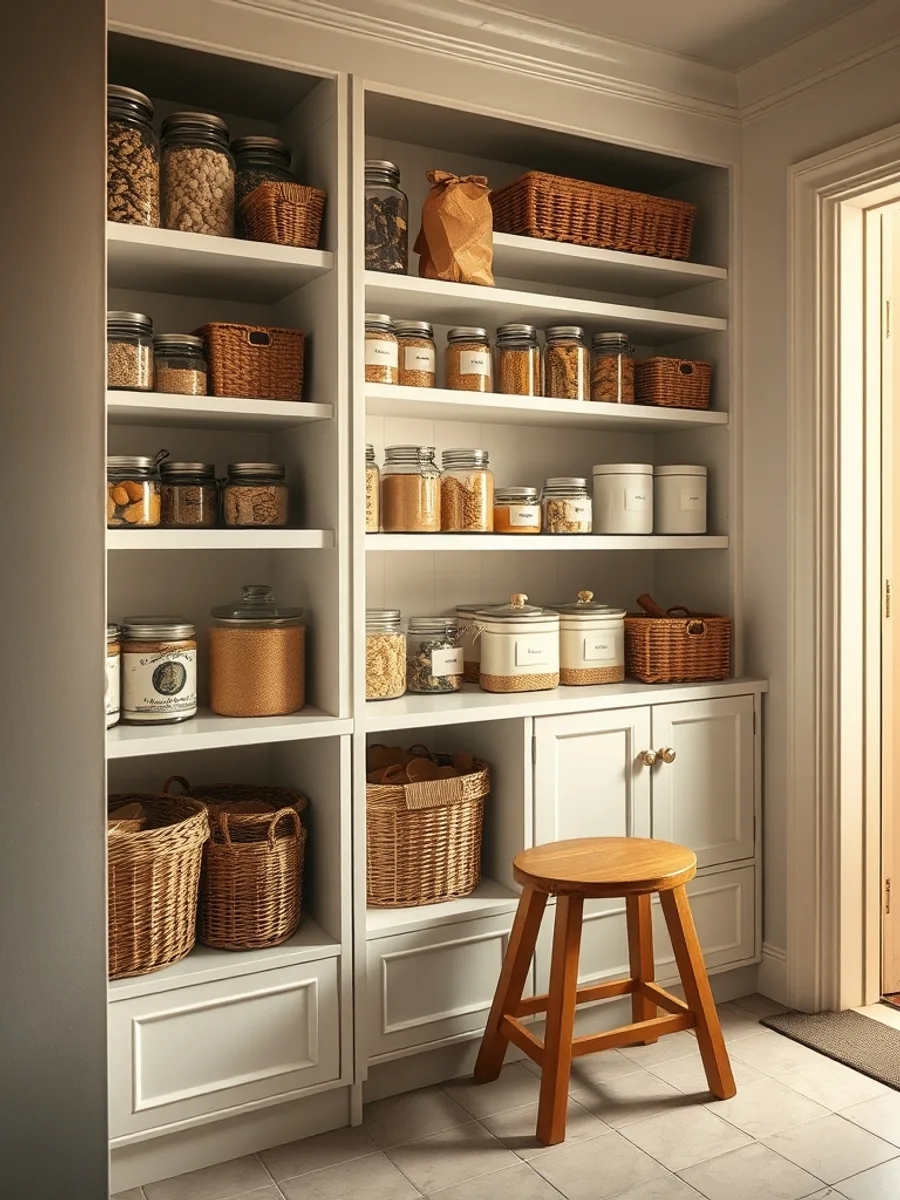
If your pantry has a top shelf, keep a folding step stool inside the pantry door. It sounds trivial, but the top shelf only works if it is genuinely easy to reach; without a stool, people start storing light, rarely used items up there and the space stops earning its keep. A two-step stool with a handle is more stable than a single platform.
The container question, answered honestly
Containers do three jobs: they keep food fresh, they make contents visible, and they make a shelf stackable. They do not organize anything by themselves, and buying a matching set before you know what you store is the most common waste of money in this project.
| Product | Best for | What to know |
|---|---|---|
| Square clear canisters with clamp or push lids | Flour, rice, oats, cereal | Straight sides use shelf space efficiently; check the lid seal and buy one size that stacks, not five |
| Glass jars with wire clamp lids | Spices, coffee, dried fruit, beans | Glass does not hold odors and cleans fully, but it is heavy and breakable on a high shelf |
| Open wire baskets | Snacks, packages, baking odds and ends | Cheap and flexible, but small items fall through wide gaps and dust gets in |
| Stackable shelf risers | Cans, jars, small bottles | Doubles the usable height of a deep shelf; measure the gap before buying |
| Over-the-door racks | Foil, wrap, spices, small packages | Uses otherwise dead space, but only works if the door closes with the rack loaded |
Two rules make any of these work. Buy containers for the food you already have, not for an aspirational version of your cooking. And write the date on the container when you fill it, with a strip of tape and a pencil if you do not want to commit to a labeling system.
Dates are the real system
A pantry stays usable when the oldest item is at the front. That is a rotation habit, not a storage product.
When a new bag or jar comes in, put it behind the open one. When you decant into a canister, write the date on the canister, not on the bag you throw away. Once a month, pull the two or three oldest things to the front of their shelf and plan a meal around them. That is the whole method, and it takes less time than a single grocery run.
If you cook from the pantry rather than the fridge, keep a short list on the inside of the door of what is running low. A list that lives in the pantry gets used; one on a phone usually does not.
What to check before you buy storage
- Measure shelf depth and the gap between shelves, not just the shelf width.
- Count how many containers you actually need before ordering a set of twelve.
- Confirm the lids are airtight if you store flour or sugar, since pantry moths are the usual reason systems get abandoned.
- Check that containers fit under the shelf above when stacked two high.
- Prefer one footprint so the set can grow a piece at a time.
The pieces that earn their place most often are square airtight pantry containers in two or three sizes, glass jars with clamp lids for coffee and spices, open wire pantry baskets for snack packages, and a stackable shelf riser for cans. A folding two-step stool is worth adding if the top shelf is currently out of reach.
If your pantry is really a cabinet and the overflow is on the counter, the zoning logic in our small kitchen storage guide applies directly, and counter cleanup covers what should never have left the pantry. A few deep storage baskets absorb bulky packages that do not fit a canister.
FAQ
How do I stop a pantry going back to chaos after a big grocery run?
Unpack the groceries into the pantry immediately, putting new items behind open ones, and keep one basket for items that are nearly finished. If a new purchase has no designated home, remove something rather than squeezing it in.
Are clear containers worth it if the pantry has a door?
Yes, mostly for the time they save: you can see what is left without lifting a bag, and bags are what spill and attract pests. If cost is a concern, decant only the things you buy in bulk and leave the rest in original packaging, dated with tape.
How often should a pantry be emptied completely?
Twice a year is enough for a full empty-and-wipe, ideally before a big seasonal grocery run. In between, a monthly check of dates and a quick wipe of the shelves keeps it workable. Deep cleaning matters less than rotation, which is a daily habit rather than a project.