Layered Lighting: A Simple Room-by-Room Plan
Most rooms are lit for cleaning rather than living. Here is a plain three-layer plan for the living room, bedroom, and kitchen, plus what to check before you buy another lamp.
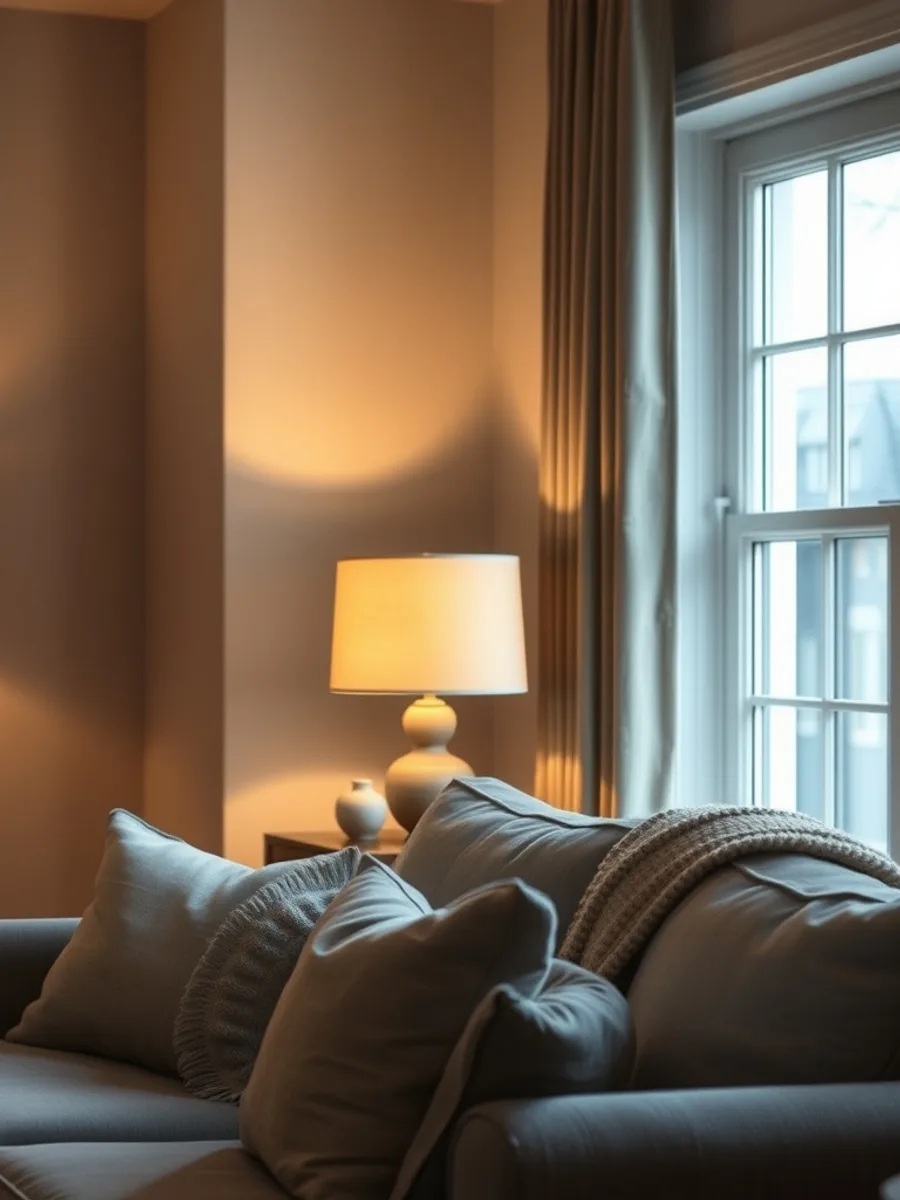
A room with a single ceiling light is lit for cleaning, not for living. Overhead light alone flattens faces, hardens shadows under cabinets, and leaves the corners dark, which is why a room can feel bright and still feel unwelcoming after seven in the evening. Layering fixes that with three kinds of light doing three different jobs.
This post contains affiliate links. If you buy through them, we may earn a commission at no extra cost to you. Read our Affiliate Disclosure.
The Three Layers, in Plain Terms
Ambient light is the general wash that lets you cross a room without tripping. It is the ceiling fixture, the pendant, the recessed cans. Task light is aimed at a job: reading, chopping, putting on shoes. Accent light is decorative and directional, the picture light, the lamp aimed at a wall, the candle-level glow on a console.
Most homes have plenty of ambient and almost no task or accent. The practical fix is not a new ceiling fixture. It is two or three small sources at different heights, each switched separately, so the room can be bright at breakfast and dim at nine.
Start with the layer you already have
If there is a ceiling fixture, treat it as ambient and put it on a dimmer before buying anything else. A dimmer converts one harsh layer into a usable range and costs less than a floor lamp. Only after that is done does it make sense to add task and accent sources.
Living Room: Light the Corners
Corners are where living rooms go dark, because ceiling light falls off long before it reaches them. A floor lamp 12 to 18 inches out from each corner, or one corner plus a table lamp at the other end of the sofa, gives the room a horizontal band of light at seated eye level. That band is what makes a room feel occupied.
Three separately switched sources is a reasonable minimum for a main living room: overhead, one floor lamp, one table lamp. A fourth, such as a picture light or a small lamp on a shelf, adds depth without adding glare. A floor lamp with a linen shade throws a softer pool of light than a bare bulb and hides the source from anyone sitting down.
Shade height matters more than most people expect. From a seated position you should not be able to see the bulb. If you can, the lamp is too short or the shade too narrow, and you will spend the evening squinting past a bright spot. Our small living room layouts put lamps in the corners for exactly this reason.
Accent light is the layer people skip. A picture light over one framed print, or a small lamp on a bookshelf pointed at a wall, gives the eye somewhere to rest after dark. If you are hanging more than one frame, work out the gallery wall spacing before you buy the light, because the fixture should sit above the group rather than beside it.
Bedroom and Kitchen: The Two Hard Rooms
Bedrooms fail because the only switch is by the door. Two bedside lamps, each with its own switch within reach of the pillow, are worth more than any ceiling fixture. A shade whose lower edge sits roughly at mattress height, or just above your shoulder when you sit up, keeps light on the page instead of in your eyes.
Kitchens fail in the opposite way: too much light from above and none where your hands are. Ceiling light lands behind you when you stand at the counter, so you work in your own shadow. That is a task-lighting problem, not a brightness problem, and adding more ceiling watts will not solve it.
Kitchen counters need their own light
Under-cabinet lighting is the single most useful upgrade in a kitchen. A slim LED bar mounted toward the front edge of the upper cabinet pushes light down onto the worktop and reduces the shadow your body casts. Plug-in versions avoid an electrician and are reasonable for renters, though the cord has to go somewhere tidy.
Over a sink or a stovetop, a dedicated fixture helps too. Check that whatever you buy is rated for the location if it sits close to steam or heat, and keep cords away from the stovetop entirely.
Bulbs, Temperature, and Dimmers
Color temperature does more to how a room feels than the fixture does. Around 2700K reads warm and yellow, close to old incandescent. 3000K is cleaner and works in kitchens and bathrooms. 4000K and above reads blue-white and rarely belongs in a living space, no matter how efficient it is.
If you are buying lamps for the first time in a while, a set of warm dimmable LED bulbs is the cheapest way to make existing fixtures behave. Look for a color rendering index of 90 or above if the light falls on wood, food, or fabric, because lower-CRI bulbs make wood look gray.
Two practical warnings. Dimmable bulbs and dimmer switches have to be compatible; a bulb that is not rated as dimmable will flicker or buzz, and an older leading-edge dimmer can misbehave with a low-wattage LED even when both parts are fine on their own. And in a rental, a plug-in dimmer switch gives you the same control without touching the wiring.
What to Check Before You Buy a Lamp
- Whether the bulb is included, and whether that bulb is dimmable
- The shade shape from a seated height, not standing in the store
- Where the switch sits: inline, base, or wall, and whether you can reach it from bed or sofa
- Cord length against the distance to the nearest outlet
- Base weight, since a tall lamp with a light base tips when a cat or a vacuum hits it
- Whether the shade material will yellow near a radiator or a sunny window
FAQ
How many lights should a living room have?
Three separately switched sources is a workable minimum: one ambient, one floor lamp, one table lamp. A fourth accent source is better still. The number matters less than the switching, because a room with four lamps on one switch is no more flexible than a room with one.
Is 3000K too cool for a bedroom?
It is on the cool side for a bedroom, where 2700K is the more forgiving choice. If you prefer 3000K for reading, keep it in the bedside lamps and leave the rest of the room warmer. Mixing is fine as long as each source is doing a different job.
Do I need an electrician to add under-cabinet lights?
Not for a plug-in bar, which uses an existing outlet and a stick-on or screw-mounted strip. Hard-wired versions need a connection to the circuit and, in most places, a qualified electrician. If you rent, the plug-in route is the one that will not cost you a deposit.